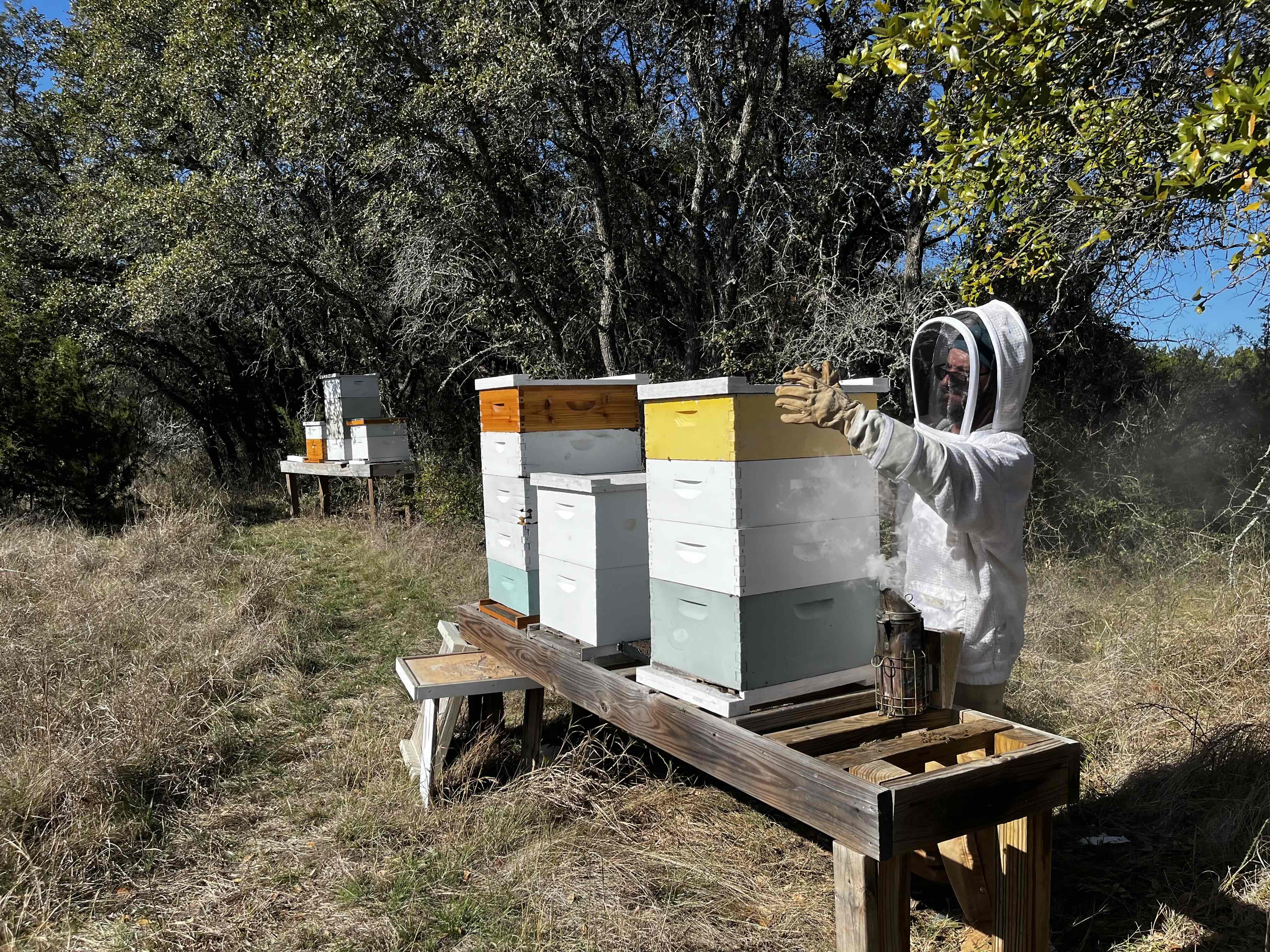
I have been keeping bees since 2015, after I called Joseph Elam in Houston to remove bees from a shed. He convinced me to get into bees, and we still keep in touch. Joseph has several decades of beekeeping experience.
A couple of months after hiring Joseph, my wife and I were driving to Louisiana to purchase nucs. Through Craigslist, we found a family in Bastrop who wanted bees on their property for an ag exemption. We kept our bees out there for a few years, and it also afforded us the opportunity to start our own bee removal business. We ran Buda Bee Wrangler for about 5 years. That business completed around 200 bee removals, which I thought was impressive. But I realized for people who do a lot of bee removals, that’s nothing. My boss at Lockhart Honey Co does as many removals every spring!
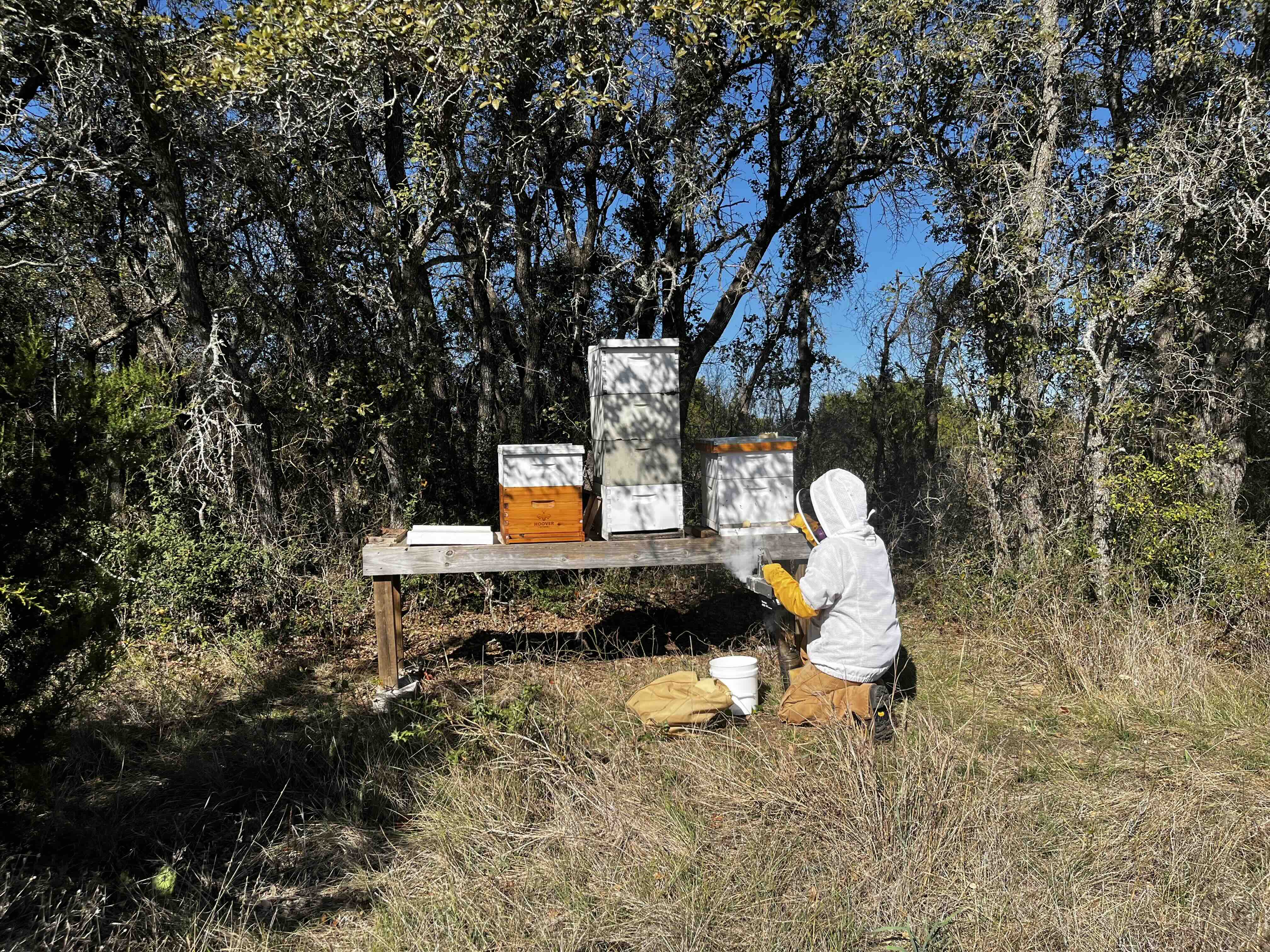
In 2024 I was hired to do agri-tourism (bee tours) for Texas Honey Bee Farm. I got to work with the owner Tanya Phillips, which was an awesome experience. Tanya is a Master Beekeeper and author, and I look up to her. I soaked up any knowledge I could from her. She introduced me to Jesus Soto, a 50-year beekeeping veteran, who mentored me for a full year. Jesus introduced me to some hive management clients, and I have been serving them ever since.
In 2025 I signed up for the Cornell Master Beekeeping Program, and graduated in 2026. Maybe a master beekeeping certificate is easy for some people, but I put a lot of effort into it. The classes went into deeper detail, and tested me on the topics that most serious beekeepers already know. I mainly signed up to learn more about honey bee pests and disease.
Around the same time I graduated from the MBK program, I was hired at Lockhart Honey Company. I currently work there part time doing all of the same things I do for my own bee business: managing bees, extracting honey, and doing all of the many chores in and around beekeeping. My part time job definitely a change pf pace, and more like commercial beekeeping than my small operation.
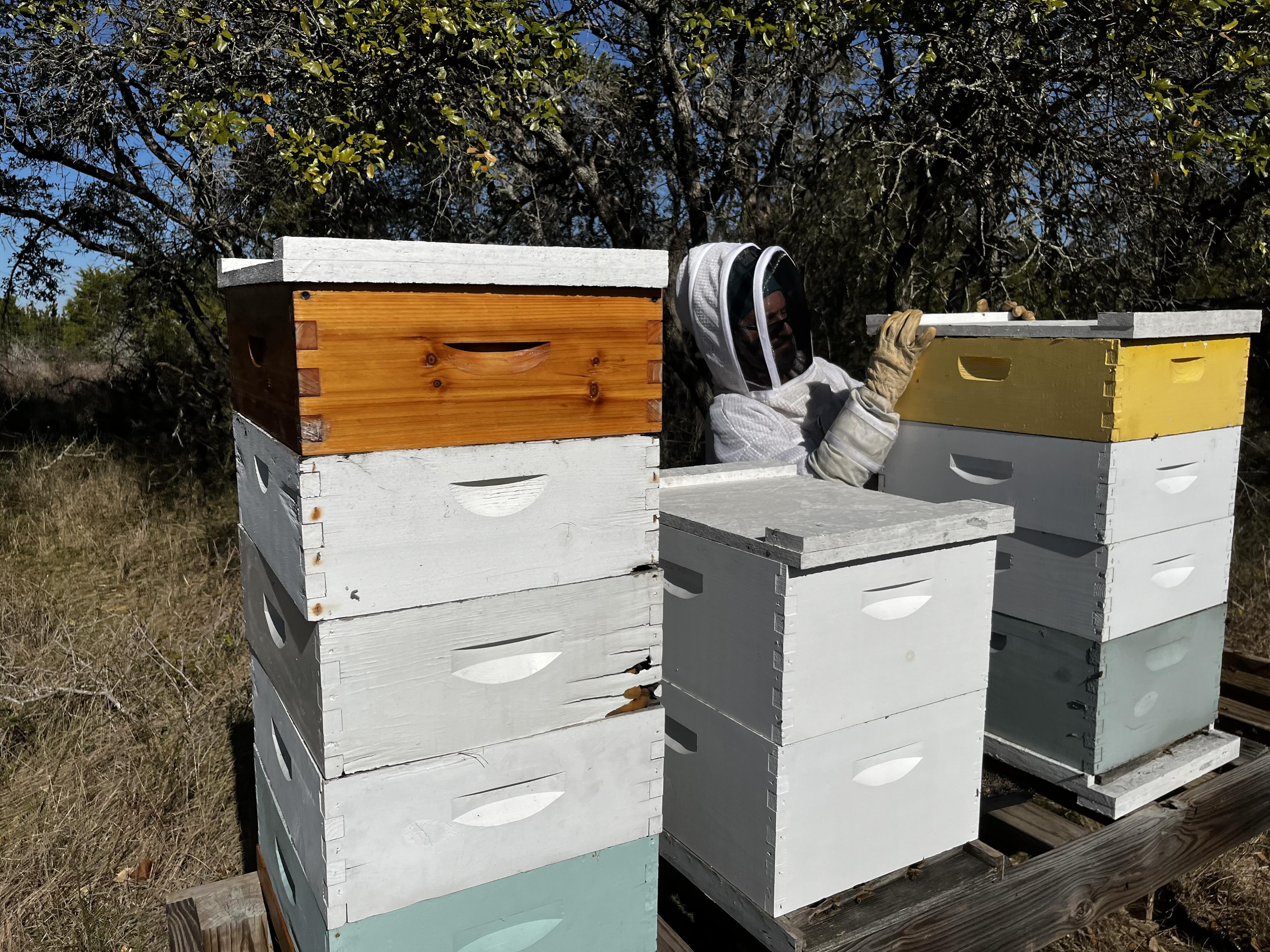
Though I am not completely treatment-free with my own bees, I do use a somewhat natural approach in dealing with Varroa mites. I rely on brood breaks in the spring, and outside of using oxalic acid vapor, I typically will apply one Thymol treatment in the fall. I am currently raising a small queen line from hives with the lowest mite counts in my personal bee yard. My wife Anne is actually the one who does most of the grafting, since she has the fine dexterity! I purchase queens with VSH traits when diversifying the genetics of my stock. So I use a mixture of natural chemicals, cultural and genetic mite control.
Beekeeping has been a crazy journey for sure. I am very grateful to be able to work in the field I am passionate about. I have a ton of respect for any beekeeper who is able to survive off bees, because I understand what they have gone through to get where they are. Beekeeping is hard work!
My wife, Anne, helps me with a lot of the bee work, and she is a beekeeper as well. So you may meet her if we work together.
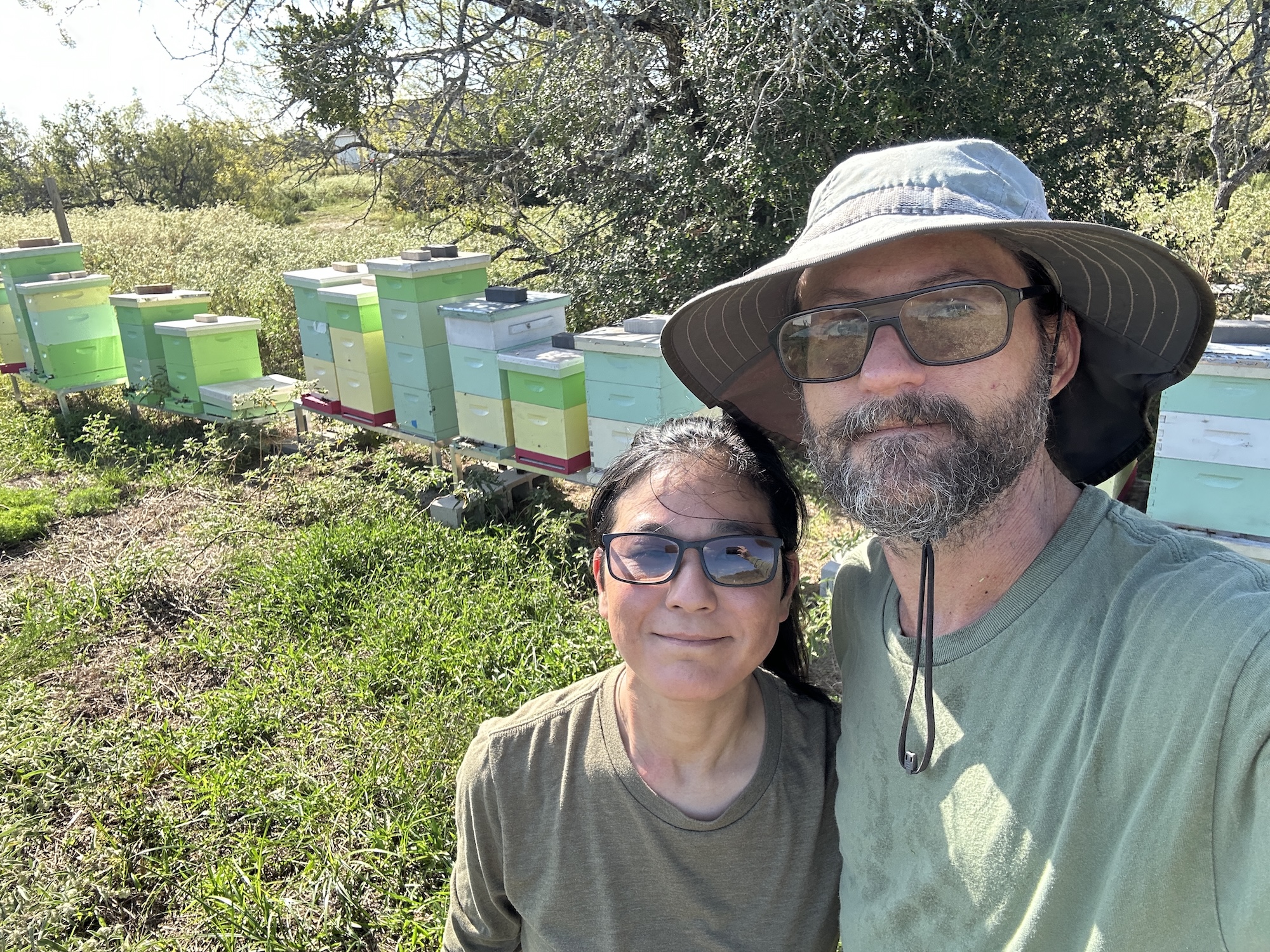
I don’t view other beekeepers as my competition. I believe I can learn something from everyone. Even brand new beekeepers bring their previous life experience to the field, and can have insights that we as experienced beekeepers have never thought of before.
I am an LGBTQ-friendly business. I am accepting of any humans. I am not here to judge anyone no matter your religious or political affiliation. In the end, we are all just Texans (or any humans), working hard, just trying to survive!

Collin Stubblefield | 2024/2026
Questions? Email me at: